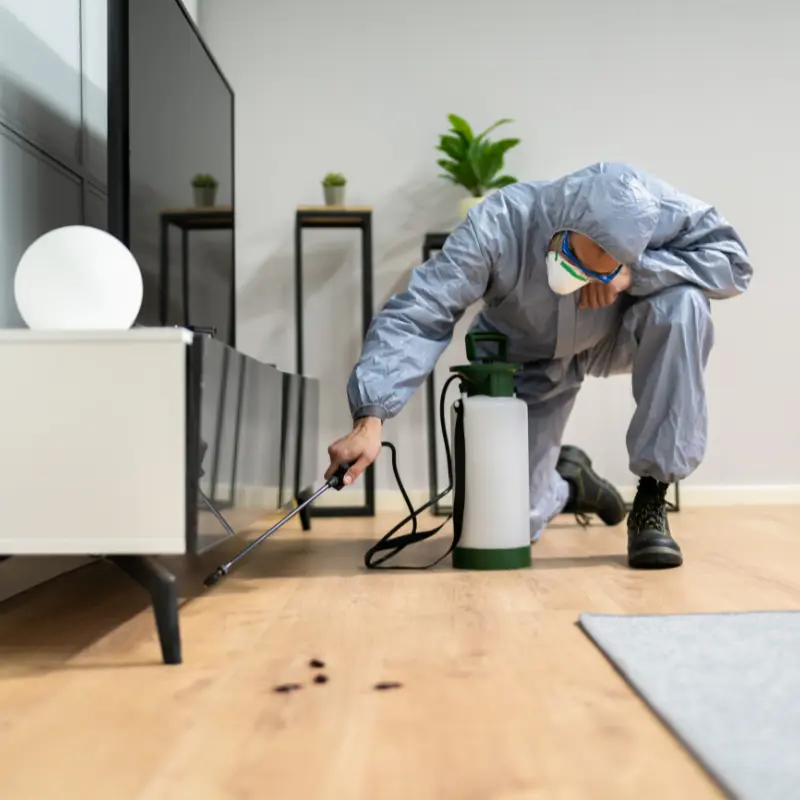
Residential Pest Control Services in Post Falls, ID
From seasonal invaders to year-round infestations, homes in Kootenai County face steady pest pressure. Eco First Pest Control puts you in touch with experienced exterminators in Post Falls and nearby areas — one call, and a local pro handles the rest.
Every treatment starts with a proper inspection, because lasting results come from treating the source — nests, entry points, and attractants — not just the pests you can see.
Why Post Falls Homes Deal With Residential Pest Control Services
Idaho has a high, dry climate with hard seasonal swings that drive pests indoors. Big temperature swings drive the pest calendar: wasps, ants, and spiders through the warm months, then mice and voles moving indoors as soon as nights turn cold.
Late summer is peak wasp season; rodent intrusion calls spike from September through November. Even smaller communities like Post Falls see steady pest pressure, and the local pros we work with cover Kootenai County and the surrounding area.
Common Household Pests We Address
Ants
Argentine ants form supercolonies along the West Coast, which is why spot treatment fails and a perimeter programme is needed; carpenter ants appear where wood stays damp.
Cockroaches
German cockroaches in kitchens and bathrooms are the main indoor species on the West Coast, with Oriental cockroaches common in damp basements and crawl spaces — both respond to gel baiting rather than spraying.
Spiders
Black widows are common in Western garages and woodpiles, and hobo spiders occur in the Pacific Northwest; brown recluses are not established on the West Coast.
Rodents
Mice and rats are handled with trapping, baiting, and sealing the gaps they use to get in.
Wasps & bees
Yellow jackets and paper wasps dominate Western nest calls, with colonies peaking in late summer; honey bee swarms are referred for relocation wherever practical.
Occasional invaders
Earwigs, silverfish, centipedes, crickets, and stink bugs that wander in seasonally are controlled with perimeter treatments.
How to Keep Pests Out Between Treatments
Seal entry points
Door sweeps, screen repairs, and sealing gaps around pipes and cables block the most common pest highways into the house.
Control moisture
Fix drips, clear gutters, and ventilate damp areas — most pests follow water before food.
Store food tight
Airtight containers and prompt crumb cleanup remove the buffet that sustains ant and roach populations.
Trim vegetation back
Branches and shrubs touching the house act as bridges; keep an 18-inch gap where you can.
Declutter storage areas
Cardboard and clutter in garages and basements shelter roaches, spiders, and rodents — plastic bins cut harborage.
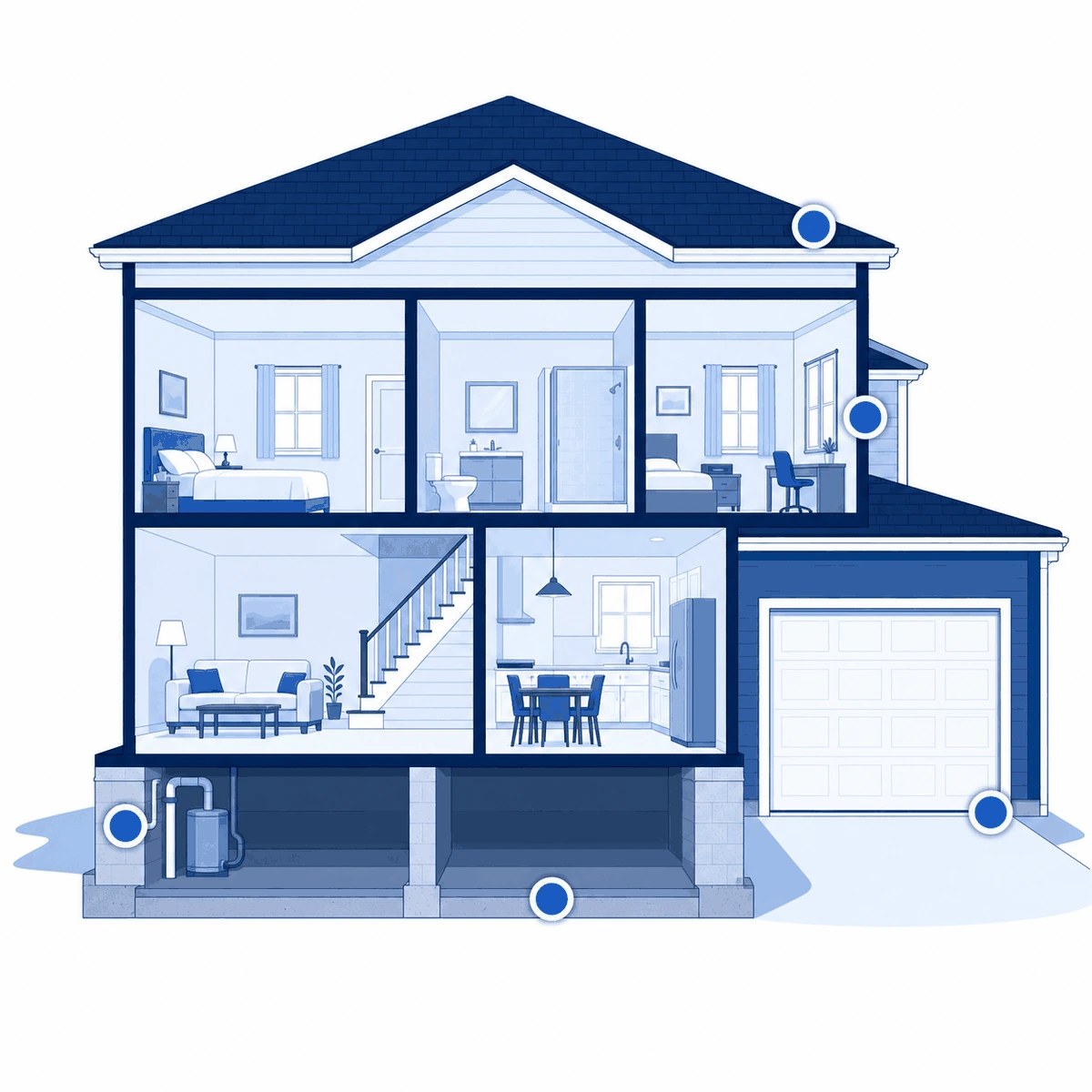
Residential Pest Control Services Timing in Post Falls
Active season
roughly 7 months of the year
Peak pressure
July and August
Pest pressure in Post Falls follows the local season, building through the warm months and easing as temperatures drop.
What Residential Pest Control Services Costs in Post Falls
$150–$350
for an initial treatment
Mid-sized markets typically land in the middle of this range, with pricing driven mainly by property size and severity.
Ranges are typical market estimates, not quotes — final pricing depends on property size, severity and access.
Residential Pest Control Services Cost by Treatment Method in Post Falls
| Treatment | Typical cost | Notes |
|---|---|---|
| One-time general treatment | $150–$400 | Single visit for an identified problem. |
| Initial visit on a recurring plan | $150–$350 | Higher than subsequent visits — it covers inspection and the initial knockdown. |
| Quarterly plan, per visit | $90–$200 | The most common residential arrangement. |
| Quarterly plan, monthly equivalent | $30–$65per month | How most companies advertise it. Compare on the annual total instead. |
| Monthly plan | $40–$80per month | Usually reserved for heavy or commercial-grade pressure. |
| German cockroach programme | $400–$1,200 | Needs multiple visits to break the breeding cycle. Priced above general service for good reason. |
| Ant treatment (carpenter) | $250–$700 | Higher than nuisance ants because it usually involves locating a nest inside the structure. |
| Emergency / same-day call-out | $100–$300surcharge | On top of treatment cost. Ask whether it applies before booking. |
Cost by Property Size in Post Falls
| Property size | Typical range |
|---|---|
| Under 1,000 sq ft | $120–$320 |
| 1,000 – 2,000 sq ft | $150–$400 |
| 2,000 – 3,000 sq ft | $180–$480 |
| 3,000 – 4,000 sq ft | $205–$540 |
| Over 4,000 sq ft | $235–$620 |
Typical market ranges for Post Falls, not quotes. Access, construction type and severity all move the final figure.
What a Fair Residential Pest Control Services Quote Looks Like
Pricing in this trade varies widely for the same job, and most of that variation is not the treatment — it is what gets bundled, warrantied or upsold around it. Here is what a straightforward quote in Post Falls should contain, and what should give you pause.
A quote should include
- A written inspection finding — what was found, where, and which species
- The specific treatment proposed and why it suits that species
- What is and is not covered, in writing
- Follow-up visits: how many, when, and whether they are included in the price
- Preparation instructions before the visit
- The technician’s licence number and proof of insurance
- Any guarantee period, and precisely what triggers a free re-treatment
What should give you pause
A price quoted before inspection
Property size, access and severity all move the figure. A phone quote is an anchor, not a commitment.
Annual contracts with no cancellation terms
Read the cancellation clause before signing. Auto-renewal with a penalty is common and easy to miss.
Vague "we use safe products"
Ask which EPA-registered product, applied where, and what the re-entry interval is. A professional will answer without hesitating.
No follow-up included
Most infestations need a second visit to break the life cycle. If follow-up is charged separately, factor it into the comparison.
No licence or insurance offered
Every state licenses pest control operators. A provider who will not show a licence number is not one to use.
If a quote is materially above the ranges above, that is not automatically wrong — access, construction and severity genuinely move the figure. But it does mean the provider should be able to explain exactly what accounts for the difference.
Residential Pest Control Services Cost Calculator for Post Falls, ID
Estimate what residential pest control services is likely to cost on your property. The starting range reflects local Post Falls market rates; property size and how far the problem has progressed adjust it from there.
Estimated cost in Post Falls
$150 – $350
for an initial treatment
A one-off treatment suits a single identified problem. For ongoing pressure, a recurring plan usually costs less over a year.
Get an exact quote: +1 855 774 7802Estimates only, not a quote. Figures are based on typical Post Falls market rates and adjust for property size and severity. Access, construction type and the specific pest all affect final pricing, which is why providers quote after inspection.
Pest Activity Calendar for Post Falls
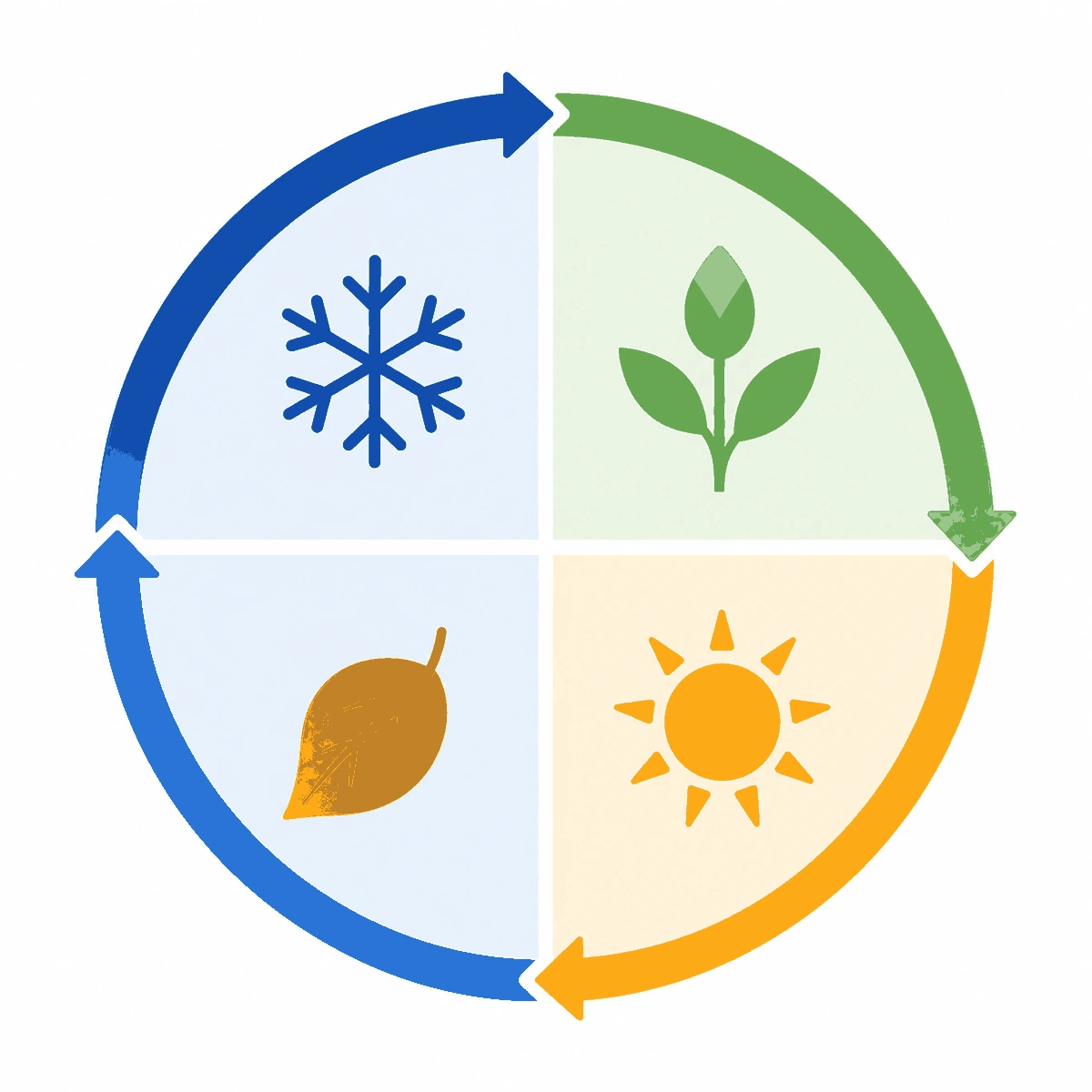
Activity levels below are derived from Post Falls's measured monthly temperature normals. Insect development effectively stops below about 50°F and accelerates above 75°F, so the local temperature curve sets the calendar.
| Month | Avg temp | Activity |
|---|---|---|
| January | 32°F | Dormant |
| February | 35°F | Dormant |
| March | 42°F | Dormant |
| April | 49°F | Low |
| May | 57°F | Moderate |
| June | 63°F | Moderate |
| July | 72°F | High |
| August | 71°F | High |
| September | 62°F | Moderate |
| October | 49°F | Low |
| November | 38°F | Dormant |
| December | 32°F | Dormant |
Post Falls gets a genuine off-season: 5 months average below 45°F, when pest activity effectively stops. Pressure peaks in July through August. Treating by June — before the build-up — takes materially less work than treating at peak.
Monthly temperature normals: NOAA 1991–2020.
Post Falls Climate and Pest Activity
Average July high
87°F
Average January low
26°F
Months above 80°F
2 of 12
Frost-free months
7 of 12
Annual precipitation
17.4"
Measured against the 1991–2020 normals, Post Falls sees 2 months above 80°F, peaks around 87°F in July and drops to roughly 26°F in January.
Those figures set the local pest calendar: activity builds as spring temperatures climb past the 50°F threshold most insects need, peaks across the 2 months above 80°F, and tapers as Post Falls moves toward its January average of 26°F.
Figures are 1991–2020 climate normals from the NOAA station at Spokane Felts Fld, 18 miles away.
Post Falls Housing and Pest Risk
Housing units
15,858
Built before 1960
3%
Single-family detached
70%
Owner-occupied
66%
Built since 2010
32%
Census figures put Post Falls's housing stock at roughly 15,858 units, with 3% predating 1960 and 32% built since 2010.
A newer housing stock means fewer structural entry points, so treatment here tends to focus on the perimeter and on landscaping conditions — irrigation, mulch against the foundation and vegetation touching the structure — rather than on extensive sealing.
Median home value locally is around $425,100, which is worth weighing against treatment cost — particularly for termite work, where an untreated colony can cause damage running to many thousands of dollars and is excluded from virtually every homeowner policy.
Housing figures: US Census Bureau, American Community Survey 5-year estimates (2023).
Pest Species Common Around Post Falls
The pests a property faces depend heavily on where it is. These are the species most often treated in this part of the country:
Argentine ant
The dominant nuisance ant on the West Coast, forming enormous interconnected colonies that make spot treatment ineffective.
Black widow spider
Common in sheltered outdoor spaces — garages, woodpiles and meter boxes — across much of the West.
Local Conditions in Post Falls, ID
Post Falls's population of roughly 40,002 supports several established providers, so scheduling is usually possible within a few days outside peak season.
Cold winters mean the practical treatment window here is shorter than in southern markets, so timing matters: work scheduled early in the season prevents populations that would otherwise peak in late summer.
Serving roughly 40,002 residents across Kootenai, providers here plan routes around travel distance, which affects how quickly a follow-up visit can be scheduled.
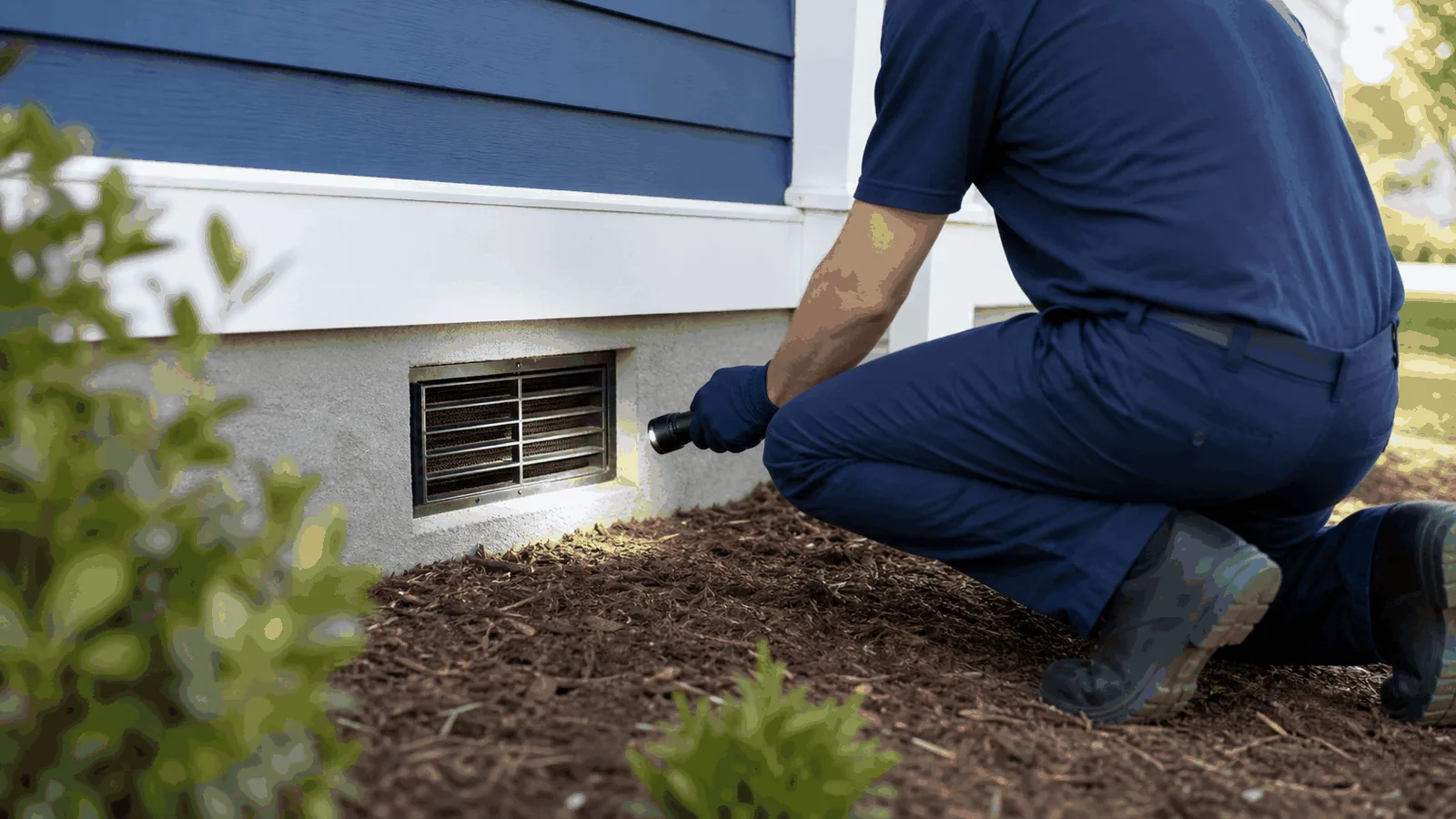
What Happens on the Visit
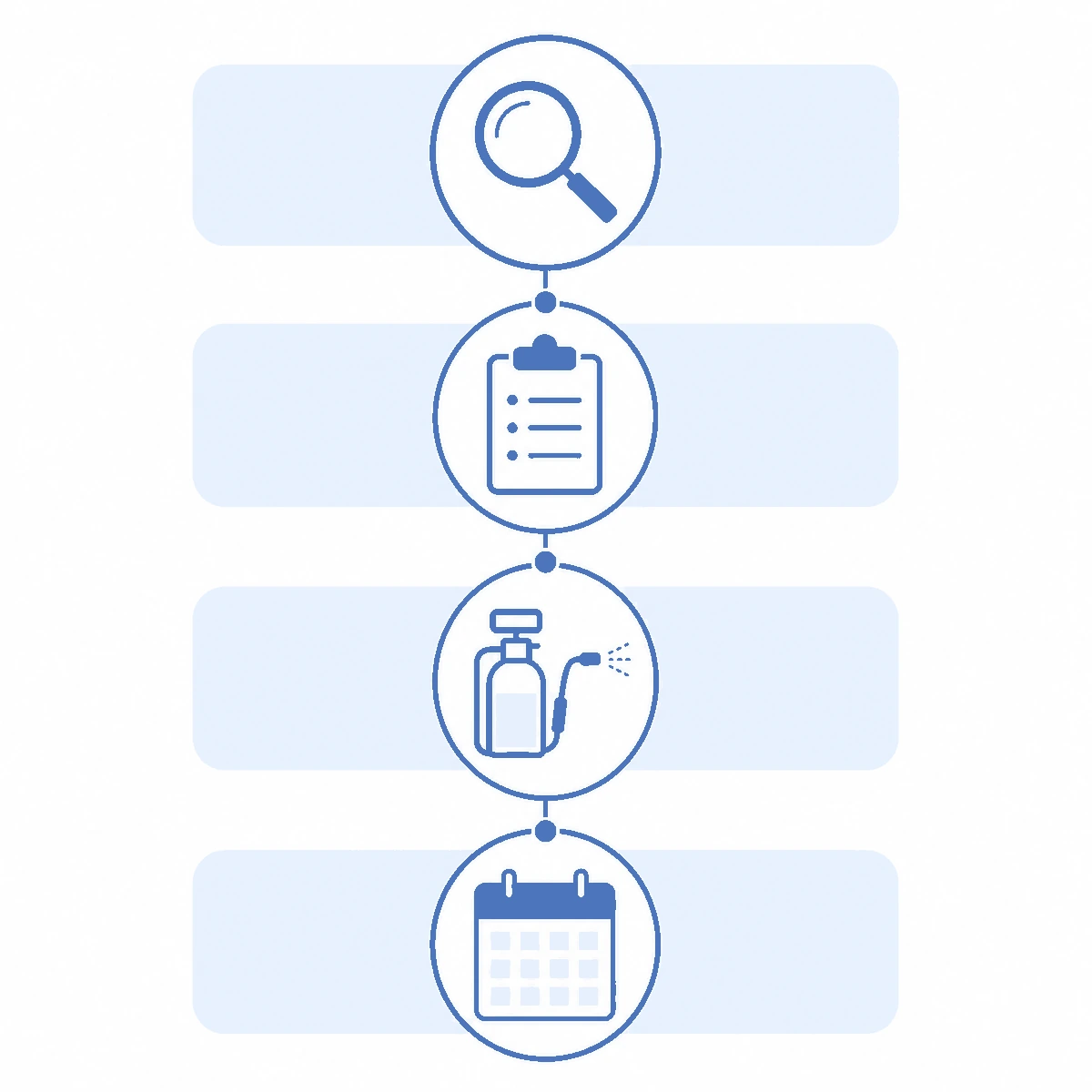
Inspection
The technician walks the interior and exterior, identifies the species involved, and locates entry points and harbourage before treating anything.
Targeted treatment
Products are applied where the pest actually lives and travels — cracks, voids, and the perimeter — rather than sprayed broadly across living space.
Exclusion advice
You get a specific list of gaps, moisture issues and conducive conditions to correct so the problem does not simply return.
Follow-up
Most infestations need a second visit two to four weeks later to break the life cycle as eggs hatch.
Most providers covering Post Falls can schedule within two to three days, sooner for urgent problems.
How It Works in Post Falls
Getting help through Eco First Pest Control is straightforward — one call, and a local professional takes it from there.

Call and describe the problem
Call +1 855 774 7802 and tell us what you're seeing, where, and for how long. It takes a couple of minutes.
Get matched with a local pro
We connect you with a licensed exterminator who covers your neighborhood and handles your specific pest.
Inspection and quote
The technician inspects the property, identifies the species and source, and gives you a clear treatment plan and price before any work starts.
Targeted treatment
Treatment uses products and methods matched to the pest and your household — including kid- and pet-conscious options where appropriate.
Prevention and follow-up
You get practical prevention steps, and many providers include follow-up visits or guarantees to make sure the problem stays solved.
Residential Pest Control Services FAQs for Post Falls, ID
Is professional treatment safe for kids and pets?
Licensed technicians use EPA-registered products applied at label rates, placed where pests travel and children and pets don't reach. Tell your technician about pets (especially fish and birds) and they'll adjust products and re-entry timing accordingly.
How fast can someone come out?
Same-day or next-day appointments are commonly available in Post Falls, ID, especially for urgent problems like wasp nests or rodent sightings. Call +1 855 774 7802 and we'll connect you with a provider who can move quickly.
One-time treatment or a recurring plan — which do I need?
A one-time service fits a single identified problem like a wasp nest. Recurring quarterly service fits ongoing pressure — ants every summer, mice every fall — and usually includes free re-treatments between visits if pests return.
What should I do before the technician arrives?
Note where you've seen activity, keep pets contained, and clear access to problem areas like under sinks or along the garage walls. Skip DIY sprays in the meantime — repellent products can scatter pests and make professional baiting less effective.
When should I schedule preventive treatment in a cold climate?
Early fall is the highest-value window — sealing entry points and placing rodent stations before the first freeze prevents the winter invasion most homes in cold climates experience.
How much does residential pest control services cost in Post Falls?
Most Post Falls homeowners pay roughly $150–$350 for an initial treatment. Mid-sized markets typically land in the middle of this range, with pricing driven mainly by property size and severity. Call +1 855 774 7802 for a quote on your specific property.
Do I need one-time or recurring service in Post Falls?
Post Falls's winters give a genuine break in pest pressure, so many households here do well with treatment timed to the start of the season plus a follow-up, rather than a year-round plan. Ongoing problems such as recurring ants or autumn rodent entry are the exception.
When is residential pest control services most needed in Post Falls?
Roughly 7 months of the year, peaking July and August. Pest pressure in Post Falls follows the local season, building through the warm months and easing as temperatures drop.
How quickly can someone come out in Post Falls?
Most providers covering Post Falls can schedule within two to three days, sooner for urgent problems.
Does winter in Post Falls kill off pests?
Only partially. Post Falls's January low averages 26°F, which suppresses outdoor activity without eliminating populations. Survivors overwinter in wall voids, crawl spaces and insulation, then re-emerge as temperatures climb in spring.
What time of year should I book residential pest control services in Post Falls?
Post Falls has about 7 frost-free months, so the effective window runs from spring through autumn. Treating early in that window — before populations build to their summer peak — takes noticeably less work than treating at peak.
Are older homes in Post Falls at greater risk?
Less so than in many markets — only 3% of Post Falls's housing was built before 1960. Newer construction seals more easily, so treatment here usually focuses on the perimeter and landscaping conditions rather than extensive structural sealing.
Does Post Falls's housing type affect treatment?
It works in your favour. 70% of Post Falls's housing is single-family detached, so infestations tend to stay contained to one property rather than moving between units. A single thorough treatment is usually enough, without the coordination that multi-unit buildings require.
Does Post Falls's rainfall affect pests?
Yes, though not the way most people expect. At roughly 17.4 inches of rain a year, Post Falls is dry enough that pests concentrate tightly around irrigation, downspouts and any indoor water source. That actually makes them easier to target, since activity clusters close to the structure.
Which pests are most common around Post Falls?
Argentine ant, Black widow spider. The dominant nuisance ant on the West Coast, forming enormous interconnected colonies that make spot treatment ineffective. Identifying the species correctly matters because it determines the treatment — an approach that works on one is often useless against another.
Get Residential Pest Control Services in Post Falls Today
Pests don't fix themselves — colonies grow, rodents multiply, and small problems turn into expensive ones. One call connects you with a trusted exterminator in Post Falls, ID who can usually inspect within days.
Connect with a trusted pest control expert near Post Falls